 1500+ reviews

Do-It-Yourself Pest Control Fire Ants
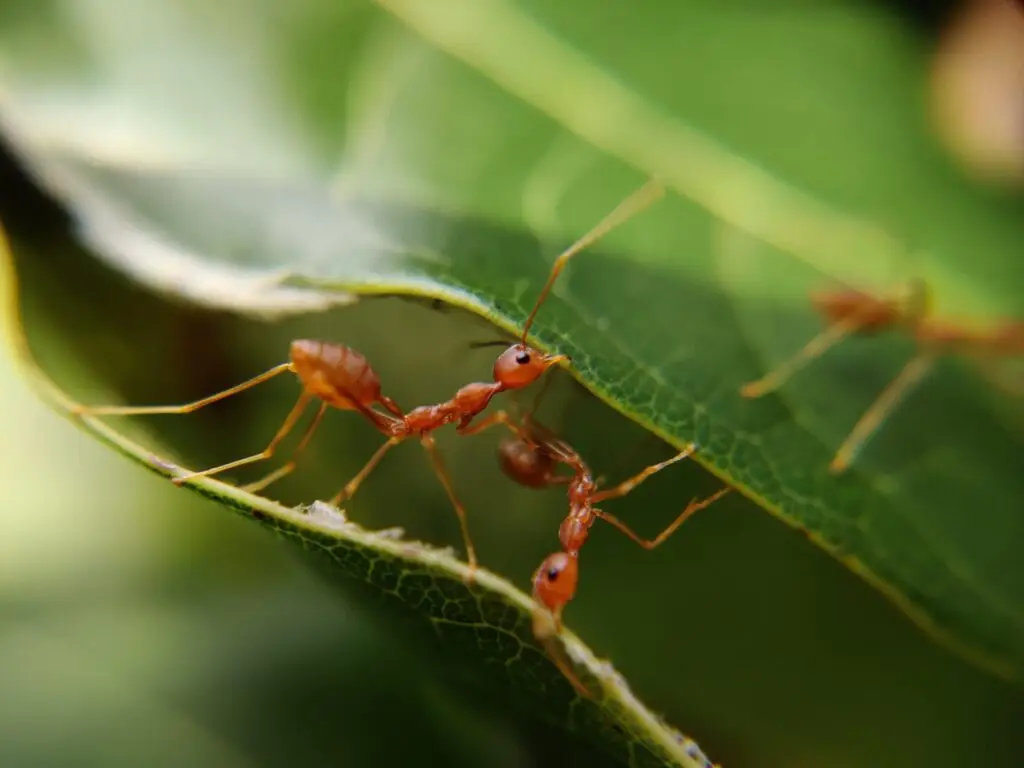
Effective fire ants control is critical when dealing with annoying fire ants attacking your property. These small, aggressive insects may quickly turn your backyard into a dangerous minefield. However, professional pest control services are not always necessary. In this blog, we’ll walk you through some efficient do-it-yourself (DIY) pest control solutions to help you recover your yard from fire ants. Identifying Fire Ants Before delving into management strategies, it’s critical to identify fire ants. These ants, ranging from 1/8 to 1/4 inch in size, exhibit a reddish-brown to black coloration. They gain notoriety for their venomous stings, and their nests are identifiable by loose, crumbly earth mounds. Do-It-Yourself Fire Ant Control Techniques Boiling Water The simple technique of pouring boiling water into the fire ant mound can effectively tackle these aggressive insects. The scalding water causes tremendous damage, resulting in the extinction of a large percentage of the ant colony. Diatomaceous Earth When sprayed strategically around the fire ant mound, food-grade diatomaceous earth can trigger a deadly process upon contact with the ants. This natural ingredient successfully desiccates and then kills the pests. Ant Baits Using commercially available ant baits proves to be a practical fire ant control approach. Ants that consume these bait stations return deadly poisons to their nest, eventually destroying the colony. Orange Oil Orange oil and water create a smothering solution that you can apply directly to the fire ant mound. This combination impairs the ants’ respiration, eventually killing them. Vinegar and Baking Soda Creating a blend of vinegar and baking soda and pouring it onto the ant mound initiates a chemical reaction. Because it upsets the ant colony’s habitat, this reaction can help eliminate it. Mowing and Maintenance Adopting a regular lawn maintenance routine, such as frequent mowing and general vigilant upkeep, can repel fire ants. These pests like undisturbed areas, and a well-kept lawn offers an atmosphere that is less conducive to their spread. Preventing Future Infestations Maintain a tidy yard and be watchful to avoid future fires and problems. Remove food leftovers, close garbage cans, and check for new mounds regularly. Protecting Your Garden Fire ants can wreak havoc on your yard and injure your plants. Here are some steps you can take to protect your garden: – Raise garden beds to discourage ant nesting. – Mulch helps to keep ants away from plant roots. – Surround your garden with ant-repelling plants such as mint and basil. Safety Considerations Wear protective clothes and take measures when adopting Do-It-Yourself fire ant control methods, as specific approaches may contain potentially toxic compounds. Recomended Read : TERMITE TALES: MEET DIFFERENT TYPES OF COMMON TERMITES Conclusion You can achieve Fire Ants Control through practical do-it-yourself approaches without requiring professional pest control services. You can protect your property against fire ants by identifying them, utilizing the necessary control methods, and keeping your yard clean. Contact Fullscope Pest Control for comprehensive pest control solutions and professional support. We are here to assist you in keeping your home and yard pest-free. Enjoy your outside places without being concerned about fire and infestations!
Pest Control Basics: How to Remove Ants From Your Home
Ants are one of the most common pests found in homes across the country. During summer months, they can quickly become a nuisance, making their way into your pantry and kitchen seeking food. Fortunately, there are several steps you can take to get rid of these pesky visitors and return your home to its ant-free state. Identify the Type of Ants You Have The first step in removing ants from your home is identifying which type you have. There are over 12,000 species of ants worldwide and it’s important to know what kind you’re dealing with so that you can choose the right pest control method for them. Carpenter ants and fire ants, for example, require different treatments than other types of ants such as odorous house ants or pavement ants. Once you’ve identified the type of ant infesting your home, it’s time to start looking for solutions. Recommended Read: Different Types of Ants Find Entry Points In order to effectively remove any pest from your home, it’s essential to identify how they’re getting inside in the first place. Search around areas like window sills and door frames where gaps may exist that allow insects access indoors. Pay special attention to places where utility lines enter the home—ants may be using these entry points as well as cracks or crevices around pipes or wires. It’s also important to keep an eye out for ant trails leading into your home—these indicate that there may be a nest nearby providing easy access for new generations of hungry visitors! Must Read: WHY TERMITE BAITING REQUIRES MORE THAN A DIY YOUTUBE TUTORIAL Choose Your Method of Pest Control Once you’ve identified how the ants are entering your property and established what type they are, it’s time to select an appropriate method of pest control. Chemical pesticides are often used but it is important that you are applying the correct product for ants, some chemicals will cause repellency and can lock them inside a structure. Other options are ant baits, placed in and around the home, as well as ant granules to prevent entry into your yard. Conclusion: Ant infestations can be frustrating but with a little bit of research and knowledge about pest control methods, you can eliminate them from your home quickly and effectively! Identifying which type of ant has invaded will help ensure that you use an appropriate treatment plan while finding entry points will give you insight into where future invaders might come from so that preventative measures can be taken before another problem arises. With this information at hand, it should be easy enough for any homeowner to remove their unwanted guests and reclaim their space Our unique approach to pest control will keep your home happy and healthy.
The Tawny Crazy Ant is Taking Over Texas Lawns – What You Need to Know
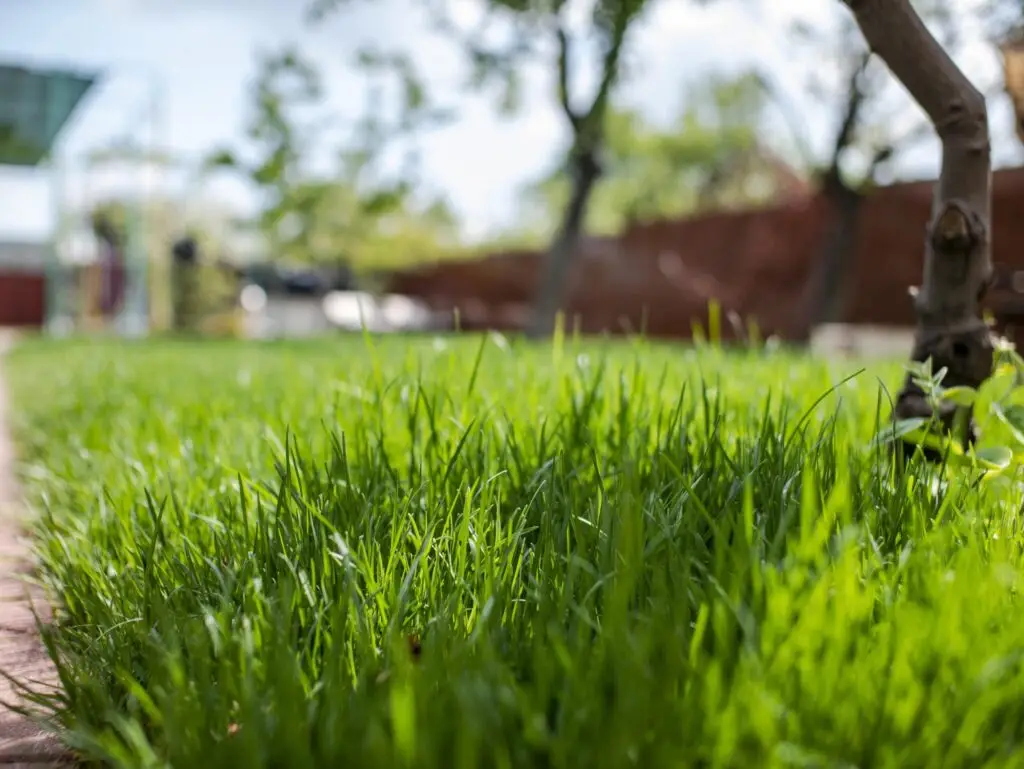
If you live in Texas, there’s a good chance you’ve heard of the Tawny Crazy ant. Also known as the Hairy Crazy ant, this invasive species has become a major problem for homeowners across the state. Why? Because they’re taking over lawns! In this blog post, we’ll explain what you need to know about Tawny Crazy ants and how to get rid of them. What are Tawny Crazy Ants? Tawny Crazy ants are small, reddish-brown ants that are native to South America. They get their name from their erratic, jerky, “crazy” movement patterns. These ants were first discovered in the United States in 2002, and they’ve been wreaking havoc on Texas lawns ever since. How Do Tawny Crazy Ants Invade Lawns? Tawny Crazy ants typically invade lawns in one of two ways: By hitching a ride on potted plants or landscaping materials that have been shipped from infested areas. By entering homes through cracks and crevices in the foundation. Once inside, they spread to other parts of the property, including your yard. Must Read: BROWN PATCH IN LAWNS – CAUSES, TREATMENTS, AND PREVENTION What Do Tawny Crazy Ants Eat? Tawny Crazy ants are opportunistic feeders, which means they’ll eat just about anything they can find. In lawns, they’re attracted to soft-bodied insects like aphids and white grubs. However, in large enough groups, they will also eat other small creatures like lizards and young birds. Plus, they have a sweet tooth! These ants are drawn to sugary substances like honeydew (a type of sap produced by aphids) and fruits that have fallen from trees. Are Tawny Crazy Ants Harmful? Yes, Tawny Crazy ants can be harmful – both to your lawn and to your family. These ants are known for causing extensive damage to landscapes due to their foraging habits. Plus, their bites are painful and can cause discomfort and irritation for humans and pets alike. If you have young children or pets who play in your yard, it’s especially important to get rid of Tawny Crazy ants as quickly as possible. How Can I Get Rid Of Tawny Crazy Ants? Tawny Crazy ants are a major problem for homeowners all over Texas – but there is hope! In smaller numbers, you can apply an insecticide designed to kill Tawny Crazy ants. The key is to find the nest/mound and thoroughly apply insecticide. For infestations, the best way to get rid of Tawny Crazy ants is to contact a pest control professional who specializes in these types of pests. At FullScope Pest Control, we have years of experience dealing with these pesky critters! We’ll work with you to develop a customized treatment plan that will effectively eliminate Tawny Crazy ants from your property – we’ll get your yard back to normal in no time. Guaranteed! Despite your best lawn care efforts, at times, pests and lawn diseases may just become overwhelming. Calling a professional lawn service is always much more cost effective and a timesaver in the long run if you feel you are overwhelmed with Tawny Crazy ants and other pests that might be damaging your beautiful yard. This can help you deter expensive damage by getting a handle on things early on. Call our Texas FullScope lawn pest control experts today at 832-898-0190 for a consultation. Or email us at info@fullscopepestcontrol.com. We can quickly help you get your lawn’s Tawny Crazy ant problem under control, as well as other expensive pest problems in your home or business.
Facts About Bigheaded Ants
Have you ever seen tiny ants with huge heads crawling about your garden or inside your home? Big-headed ants (Pheidole spp.) are fascinating creatures recognized for their unique social structure and tremendous impact on ecosystems. Let’s look at some amazing facts about these tiny yet magnificent insects. In this blog, we will explore big-headed ants’ characteristics, behaviors, and, most importantly, effective strategies for controlling and preventing infestations. Understanding Big-headed Ants Big-headed ants get their name from the distinctively huge heads of their colonies’ soldiers or major workers. This large feature, disproportionate to the rest of their body, gives them a cartoonish appearance, but it serves an essential practical purpose. The enormous head stores powerful jaw muscles that aid in colony defense, nest excavation, and manipulating huge food items. Each colony also has minor workers, who are much smaller and more ant-like in appearance. Their responsibilities typically include foraging and caring for the young. This expression of physically separate worker castes is an intriguing example of ‘polymorphism,’ as biologists term it. How Do You Get Rid Of Big Head Ants? To effectively eliminate big-headed ants, a combination of approaches is often necessary. Consider the following strategies: Locate and Target Nests The ability to locate and target ant colonies is critical for successful management. Follow ant trails to identify the entrances to their nests, frequently found in damp soil, under rocks, or in wall gaps. When their colonies have been located, they apply targeted control tactics to disrupt them. Baiting Baits are an efficient and environmentally friendly way to control big-headed ants. Place ant baits designed for this species near ant routes and nest entrances. These pesky ants will take the poison back to their nests, where it will be used to kill off the entire colony. Barrier Techniques Putting up physical obstacles will help keep big-headed ants out of your home. Close any openings that could allow water or electricity to leak. If you’re concerned about ants invading your home, you might try utilizing a barrier treatment consisting of a residual insecticide around the outside of your house. Non-Toxic Treatments If you prefer non-toxic techniques, try diatomaceous earth, a fine powder that destroys and dehydrates the ants’ exoskeleton. Sprinkle it along ant trails and nest openings as needed, then repeat. Professional Assistance If your infestation persists or becomes overpowering, you should seek professional assistance. Pest treatment professionals have specific knowledge and access to more powerful chemicals that eliminate big-headed ants. H2: How Did I Get Big-Headed Ants? Bigheaded ants can enter your home or garden through various entry points. Cracks in foundations, openings around windows and doors, and utility wires are all common access locations. These tiny insects are skilled at locating microscopic gaps and exploiting them to gain access to your home. Bigheaded ants are opportunistic foragers drawn to food sources, including crumbs, spilled liquids, and pet food left out in the open. They can also form outside colonies near gardens, flower beds, and trees, eventually moving indoors for food or suitable nesting locations. What Are the Telltale Signs of a Bigheaded Ant Infestation? Recognizing the indicators of a big-headed ant infestation is critical to control it effectively. Keep an eye out for these signs: Trails: Bigheaded ants have well-defined trails formed by worker ants between their nest and food sources. These tracks are frequently seen traveling in a straight line. Mounds: Bigheaded ants, especially in outdoor places, form small mounds of dug earth around their nest entrances. These mounds are often modest and can be seen near pavement cracks, under rocks, or in dirt. Plant Damage: Bigheaded ants are omnivorous and eat various foods, including seeds and aphid secretions. In the garden, look for evidence of plant damage, such as twisted growth or wilted leaves, that could indicate the presence of bigheaded ants. Indoor Sightings: If you see big-headed ants inside your home, especially in the kitchen or pantry, it’s a sure sign of an infestation. Focus on the kitchen, pantry, and other areas where food is stored or prepared. Swarming Behavior: Bigheaded ants may engage in mating flights at particular times of the year when winged reproductive ants exit from the colony. Swarming ants on your property indicate a mature and well-established infestation. How Dangerous Are Bigheaded Ants? While big-headed ants are not known to cause considerable structural damage, they can be a nuisance and alter the natural balance of your living environment. Bigheaded ants forage aggressively, and their enormous colonies can swiftly overtake an area, affecting indoor and outdoor spaces. They may infiltrate kitchens, pantries, and storage places in search of food, potentially contaminating it. They can harm plants and alter the natural environment of gardens. Furthermore, bigheaded ants have been observed displacing native ant species, significantly altering local biodiversity. Do Pheidole Ants Sting? Pheidole ants, notably big-headed ants (Pheidole spp.), can sting; however, their stings are generally not dangerous to people. Pheidole ants, unlike several other ant species, are not recognized for having extremely aggressive or painful stings. Individual reactions to ant stings can vary, and some people may develop moderate allergic reactions or discomfort due to Pheidole ant stings. While Pheidole ants may sting if they feel threatened or their nests are disturbed, their primary defense method is to bite with their enormous mandibles. These bites are more of a nuisance than a significant threat and should not be taken seriously. Avoiding direct contact with Pheidole ants and their nests is still preferable to reduce the chance of bites or stings. Prevention Tips Against Big-Headed Ants Preventing future infestations is as crucial as controlling the current ones. Consider the following preventive measures: Must Read: HOW TO CONTROL POCKET GOPHERS What’s Next? If you struggle with a big-headed ant infestation or need professional assistance with pest control, look no further than Fullscope Pest Control. Our team of highly skilled and experienced pest control experts is dedicated to providing effective solutions to address your specific needs. We have in-depth knowledge of the behavior and habits of
How Do You Kill Carpenter Ants
Carpenter ants can be a nuisance, especially if they invade your home. Not only do they cause damage to wooden structures, but they can also contaminate food and cause allergies. You’re in luck if you want to eliminate carpenter ants without using dangerous chemicals. There are several natural ways to eliminate carpenter ants that are safe and effective. Diatomaceous Earth Diatomaceous earth is a natural substance composed of the fossilized remains of diatoms, which are small aquatic creatures. It dehydrates the ants and disrupts their exoskeletons. You can use diatomaceous earth to treat locations where you’ve noticed carpenter ants. When working with diatomaceous earth, wear a mask because it can irritate your lungs. Boric Acid Boric acid is a naturally occurring ant-toxic chemical. Combine boric acid with sugar or honey and place it near carpenter ant nests. The ants will be drawn to the bait, eat it, and return it to their nest. This will exterminate both the ants and the colony. Essential Oils Essential oils such as peppermint, clove, and tea tree oil are natural insecticides that can repel carpenter ants. In areas where carpenter ants are seen, spray a few drops of essential oil with water. Cotton balls can be soaked in essential oil and placed in ant-infested areas. Vinegar Vinegar is a natural cleaner that can also be used to repel ants. Spray an equal mixture of vinegar and water around the locations where ants are active. You can also use vinegar to clean surfaces ants have been crawling on. Cinnamon Cinnamon is an ant repellant that can also be used to kill ants. Sprinkle cinnamon around the areas where you have seen carpenter ants. You can also make a paste with cinnamon and water and apply it to areas where ants are active. Use Hot Water Carpenter ants can be killed by pouring hot water into their colony. Boil a large pot of water and pour it directly into the nest. Be careful when doing this, as boiling water can be dangerous. Use Lemon Juice Lemon juice is a natural ant repellent that also masks their scent trails. Squeeze fresh lemon juice around the locations where carpenter ants have been spotted. A cotton ball dipped in lemon juice and left near ant hills can also be effective. Use Bay Leaves Bay leaves are a natural insecticide that can repel carpenter ants. Crush some bay leaves and sprinkle them around where you have seen carpenter ants. You can also place bay leaves in your pantry or other areas where you store food to prevent ants from getting in. Must Read: DOES TEA TREE OIL KILL BED BUGS Conclusion These natural methods can help you eliminate carpenter ants without using harmful chemicals. You should contact a pest control company if you have a large infestation. Fullscope Pest Control is a trustworthy and professional pest control company that can assist you in getting rid of carpenter ants and other pests in your home. Our exterminators can assess the situation and provide effective and safe solutions to eliminate the infestation. Contact us today to schedule an appointment.
How Do You Get Rid Of Big Black Ants
Key Highlights: How to Get Rid of Giant Black Ants It’s not as simple as killing any ant you see. Like all ant colonies, these sizeable black ant colonies begin with scout ants that explore your house in search of the best spots to feed or hang out. Once they’ve located an excellent food supply, their friends continue on the trail and construct a nest in your wall. Below are some things you can do to get rid of them if you find them in your home. Use Sugar And Baking Soda Bait You can use baking soda and powdered sugar in equal proportions to create a quick and all-natural carpenter ant bait. Place this mixture in shallow dishes where the ants are most active. These can also be positioned outside, especially next to windows and doors. The baking soda naturally kills the ants, while the sugar in the combination attracts them. Use Diatomaceous Earth One popular natural insecticide is diatomaceous earth. When ants come into contact with this abrasive substance, it destroys their exoskeleton and kills them. If possible, apply DE directly to the colony’s nest and all problematic sites. Ants frequently perish after ingesting diatomaceous earth, making it an exceptionally efficient weapon against them. Clear Ant-Temping Food Away Ants are especially drawn to fatty and sweet meals, so it’s crucial to keep as much food scraps out of your home as you can. For syrups, baking ingredients, and leftover food, use airtight containers. Additionally, make sure you clean up spills as quickly as you can to avoid leaving crumbs on your surfaces and floor. Clear Out Ant Nests Eliminating the pests at the source is preferable if you see an apparent ant nest close to your home. Create a hole in the center of the nest with a small shovel, then fill it with hot water. Until no more ants emerge from the nest, keep doing this. Use Chalk Using chalk is one of the natural ways to get rid of ants. Calcium carbonate, which is present in chalk, aids in ant prevention. Spray some powdered chalk in the places ants enter or mark the entrance with a chalk line. You should draw chalk lines around your house to prevent ants from entering. Although the reason why this line contains the ants from entering the home is unclear, it is unquestionably effective. Use White Vinegar Ants hate white vinegar’s smell. Mix equal parts water & white vinegar and add essential oil, then shake vigorously. Sprinkle this solution where ants enter. This strategy may not kill the ants but will keep them from entering the forbidden area. It is best to spray it on windowsills, doors, and other ant-prone areas. Must Read: SQUIRRELS IN THE ATTIC: HOW TO GET RID OF THEM FOR GOOD Final Thoughts A typical problem for homes had giant, black ants. Because of this, we have provided you with information on how to get rid of huge black ants. You should seek professional assistance if you still need help getting rid of them. Get in touch with Fullscope Pest Control for excellent services in eliminating your ant and other insect problems. Contact us immediately.
How Much Does Pest Control Cost For Ants
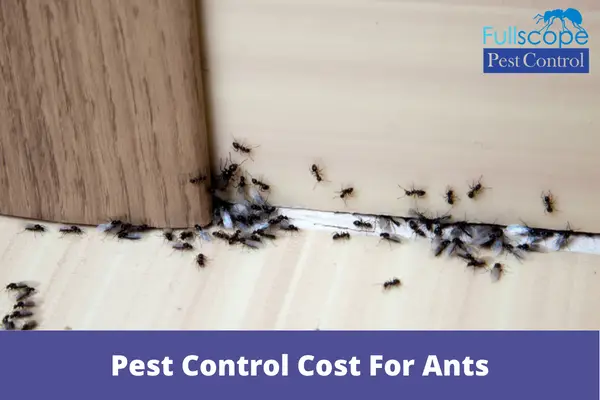
At some time, every homeowner has the uncomfortable feeling of seeing a little ant crawl over their kitchen or bathroom surfaces. The presence of a single ant isn’t usually a cause for concern, but when there are dozens or even hundreds, it’s time to call in the experts. An ant exterminator may use various techniques to eradicate your ant problem from the nest to the colony. So the question is, how much does it cost you to get those pesky ants removed? The cost of hiring an ant exterminator can vary greatly depending on multiple factors. Ant Classification When it comes to ant control, one is not the same at all. It may cost more to eliminate fire ant mounds around your home than it would remove carpenter ants that invade their way inside your walls. See the cost breakdown to eradicate some ant species below. Carpenter Ants ($250–$500) Carpenter ants burrow through the wood for their nests, as their common name may imply. Carpenter ants, in contrast to termites, do not eat wood; instead, they spit it out of their tunnels as sawdust. Fire Ants ($100–$300) Fire ants, with their distinctive reddish-brown coloring and severe sting, are typical in backyards, parks, and playgrounds. These unwanted guests are drawn to your home by the warm temperatures and the food or garbage scraps you’ve left lying around. Pharaoh Ants ($200–$250) Pharaoh ants can be anything from tan to brown and are notorious for eating almost anything. These pests invade your house in search of any food source, from sugary snacks to leftover meat. The Size Of Your House Pricing for ant extermination may vary depending on your property’s square footage and the pest control company you work with. An undeniable fact is that the value of a property will increase proportionally with its size. One-time treatment charges for a 2,000-square-foot home may be $160, while a 3,500-square-foot property would cost $200. Infestation Severity The quantity and intensity of the infestation is another aspect that might increase or decrease your costs. The price will be lower if the ant problem is contained to a limited area of your property. The expense of pest management may rise if you have a big ant problem that requires many visits. Also, know about how to take control of flies in restaurant Quantity Of Treatments One treatment may not be enough to eliminate your ant infestation. Plan on repeated ant eradication treatments if the infestation is extensive and if the tiny pests keep coming back. It costs between $800 and $1,400 for four treatments each year to deter returning ants. General Cost If you need a one-time treatment for your ant problem, you may expect to pay around $150 to employ an exterminator. The price of an ant treatment can range from $80 up to $500. Various variables, like the square footage of your property and the number of treatments necessary, will determine the final cost. Ants are distinguished by their extensive underground anthills and widespread colonies. It’s easy to get rid of an ant or two from your kitchen counter or window sill, but if you have an infestation, you might want to get help. Here at Fullscope Pest Control, we will determine what kind of ant infestation you have in or around your house before developing a pest management strategy to eliminate them. Call us to get rid of ants professionally so they won’t return.
What Are the Different Types of Ants in Texas?
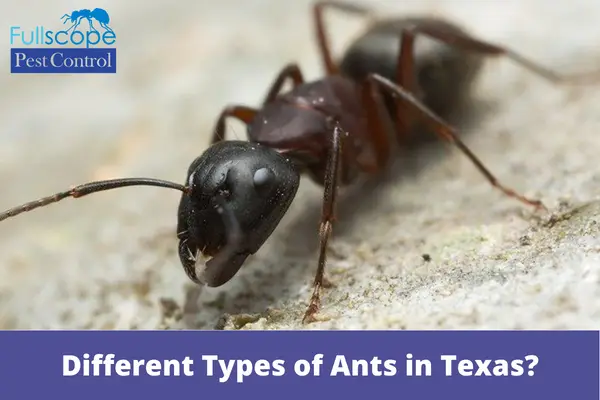
The type of ant invading your home might affect the severity of an infestation. Innocent ants exist. Other forms cause structural harm. This information can help you understand the different varieties of ants in Texas, but contacting a professional exterminator is the best approach to identify them. Fire Ants Or Red Fire Ants The red fire ant is one of the species found in the most significant numbers in east Texas and throughout the southeast United States. Workers of fire ants range in size from 1/16 to 3/16 inches and have a reddish-brown coloring. Fire ants have a double pedicel and can be recognized by their appearance. In addition, fire ants are known to construct recognizable mounds with no obvious entrance holes on the ridge itself. One of the most typical characteristics of the fire ant is its hostile reaction to the disturbance of its nest, which includes delivering a powerful and excruciating sting. Crazy Ants The frantic and unpredictable manner in which crazy ants run has earned them their name. In addition, they can be differentiated from other species of ants, such as the Argentine ant, by the large number of hairs covering their body, including four pairs of strands located on the top of their thorax. The natural crazy ant is a species of crazy ant that can be found frequently throughout East and South Texas. This ant is dark brown, has long legs and antennae, and moves quickly. Buildings are a typical target for its infestation, particularly in the state’s warmer and more humid regions. Also, read about the Top 5 Scorpions found in Texas. Carpenter Ants The length of a carpenter ant’s body ranges from one-quarter to one-half of an inch, and its color can vary from solid black to brown to a blend of black and red-orange. The workers can be any size, have a single pedicel, and have a smooth and curved thorax when viewed in profile. Carpenter ants are primarily nocturnal and only emerge from their nests at night to forage along paths that run along fences, tree limbs, water hoses, and other linear items. They can be found not just in the hollow trunks and branches of trees but also in hollowed doorways and boxes, as well as the ceilings and walls of buildings. The Little Black Ants In the summer, swarms of these dark brown to jet-black crawlers are abundant, and they can typically be found in regions with a dense canopy of trees. The little black ants conceal themselves in dark places such as behind walls, under rocks, beneath piles of logs, and other similar areas. They have stingers; however, because their bodies are so small and frail, you probably wouldn’t even feel the prick if they pricked you. Texas Leaf-Cutting Ants Leaf-cutting ants reside in two-million-strong nests. They were named because they tended to cut leaves and other plant parts. These ants destroy weeds, grasses, plum and peach trees, blackberry bushes, and numerous cereal and forage crops in Texas. Ants don’t eat leaf pieces; they use them to grow a fungal garden in their underground nest. As the fungus grows, the ants feed its larvae. They solely eat this fungus. These are some types of ants you’ll find in Texas. The best way to prevent an ant infestation is to keep your home clean, dry, and well-ventilated. If you notice ants in your home, contact Fullscope Pest Control! We are knowledgeable and experienced in treating ants and can help you get rid of them quickly.
The Most Effective Ways to Control Fire Ants in Your Home and Lawn
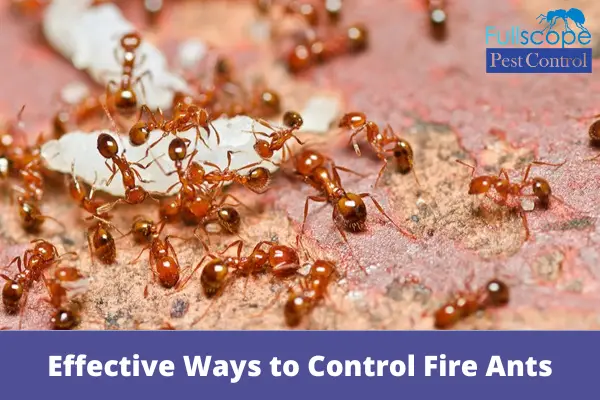
When fire ants colonize an area, they may damage by constructing massive mounds. These ants are not only a danger to property but also to people and animals. When their nest is disturbed, many fire ants emerge to swarm and attack the intruders. The blisters left behind by their stings and bites can be unpleasant and uncomfortable. Learn about methods available for getting rid of them so you can stop them from taking over. Protect your family and pets from dangerous fire ants by customizing your treatment to the specific situation. Treatments For Mounds Mound treatments can be either dry or liquid drench solutions. They are efficient killers and the quickest approach to getting rid of massive, annoying lumps in the wrong spot. When mounds’ pop up’ in between bait applications, it’s helpful to have a solution on hand, and mound treatments do just that. Dry mound treatments, often known as dry powders, are commonly sold to eliminate fire ants. Products used as liquid mound drenches are not often marketed for the sole purpose of controlling fire ants. Many household pesticides may be applied as a liquid drench to eliminate fire ants. Must Read About How To Get Rid Of Carpenter Ants Fire ant mounds can be eliminated quickly by the use of liquid drenches. Spraying an ant mound thoroughly with an efficient pesticide can kill all ants within a few hours. However, making and applying liquid drenches takes a considerable amount of time. Note: Do not disrupt mounds before treatment, regardless of technique. If that happens, the workers may relocate the queen to a more secure location. Fire Ant Baits Granular products called “fire ant baits” comprise food items that fire ants find attractive, with tiny doses of pesticides or insect growth regulators that have a gradual impact. There are various benefits of using baits. They are affordable, easy to apply, safe for pets and animals, and they work! The only drawback to using baits is their relatively slow effectiveness. One secret to the effectiveness of fire ant baits is their delayed release of active ingredients. Adult fire ants can’t consume solid food. For their young, they must return with the bait grains to the mound. The larvae turn this solid food into liquid, distributed from ant to ant throughout the colony. The slow-acting insecticides used in fire ant baits become distributed throughout the territory before they start killing ants. Granular baits eliminate the foraging workers before they can return the bait to the mound. Note: Some baits operate faster than others, but the slower-acting baits tend to give longer control. Broadcast Insecticide Treatments Granular solutions are the broadcast pesticide treatments that homeowners use the most frequently to control fire ants; nevertheless, don’t confuse them with baits. The ants do not gather the granules and return them to the mound since they do not contain food or an attractant. These items kill ants that come in touch with treated soil because they include long-lasting contact insecticides. Spread the granules over the area you wish to protect using the suitable spreader and the recommended amount. Broadcast insecticide treatments often have far higher rates than baits, and many may be sprayed using lawn fertilizer spreaders. Note: Young queens attempting to colonize the region will also be killed when they come into touch with the treated soil, but it will be the foraging workers who will be affected first. Avoid any hassle; Fullscope Pest Control can help you with these types of problems! Contact us now for a fire ant-free environment.
How To Get Rid Of Carpenter Ants?
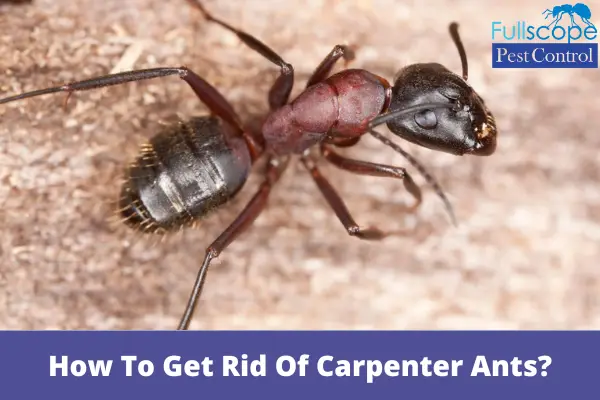
Over 12,000 species of ants exist. They can be in two groups: those that are only bothersome but not harmful and those that can cause severe damage. Both indoor and outdoor spaces may be home to these critters, but carpenter ants are one species in particular that you don’t want to live in your house or garden. Even though they hardly ever bite, carpenter ants are named for how they harm the wood that makes up your home and furniture. They are usually large, measuring between 1/2″ and 5/8″, red-black, all-red, all-black, or all-brown. Like all ant colonies, carpenter ants begin with ants that ransack your house in search of the best places to feed or stay. Once they’ve found a good food source, their mates (the “workers”) continue on the trail and begin building nests in your wall. If you’ve seen those wandering carpenter ants and begin spotting piles of what appear to be wood shavings, Congratulations! You’ve probably found these little explorers. Here’s what to do next if you’re wondering how to get rid of carpenter ants: 1.Create A Trap To Find The Nest Finding the nest and killing the queen are the best ways to eliminate carpenter ants. Carpenter ants commonly nest indoors close to sinks, tubs, and other areas with high moisture levels. In the outdoors, look around tree stumps, firewood piles, and wooden structures that have apparent moisture damage. Pest control professionals advise putting out a trap so you can find the nest simply by observing the ant carry it back to the nest. Since they enjoy sweets, a small amount of jelly or jam may be adequate. You can combine sugar and baking soda, then put the mixture in a bowl. Although the sugar attracts ants, baking soda naturally kills them. Also read about how to keep Honey Bees away form home. 2.Take The Nest Down Apply insecticide dust by drilling in the area where you think the nest maybe once you’ve located it by following the ants. Boric acid should then be “puffed” through the holes using a bulb duster. Additionally, non-toxic borax, boric acid, or diatomaceous earth are options. The procedure might need to be repeated several times. Spray some liquid insecticide on the nest if it is outside. 3.Reduce The Chance Of Nesting Trim dead branches off of trees and remove rotting stumps. Avoid letting tree branches touch the roof of your house. Repair any wood impacted by water on a structure, and store lumber or firewood far from it. 4.Takeout Food Sources And Standing Water By avoiding easily accessible food sources, you can eliminate anything pests need to survive. Many of the problems will be stopped by cleaning or storing food. Keep your gutters clean and in good condition, and level ground near fences or other structures where water may accumulate. Put moisture barriers under porches and other places that are prone to flooding. You can do a load of things to help control carpenter ants in your home, but if this can be too much work or a mess you don’t want to make, call Fullscope Pest Control right away! Our excellent and trustworthy experts are here to help you have a hassle-free home.